

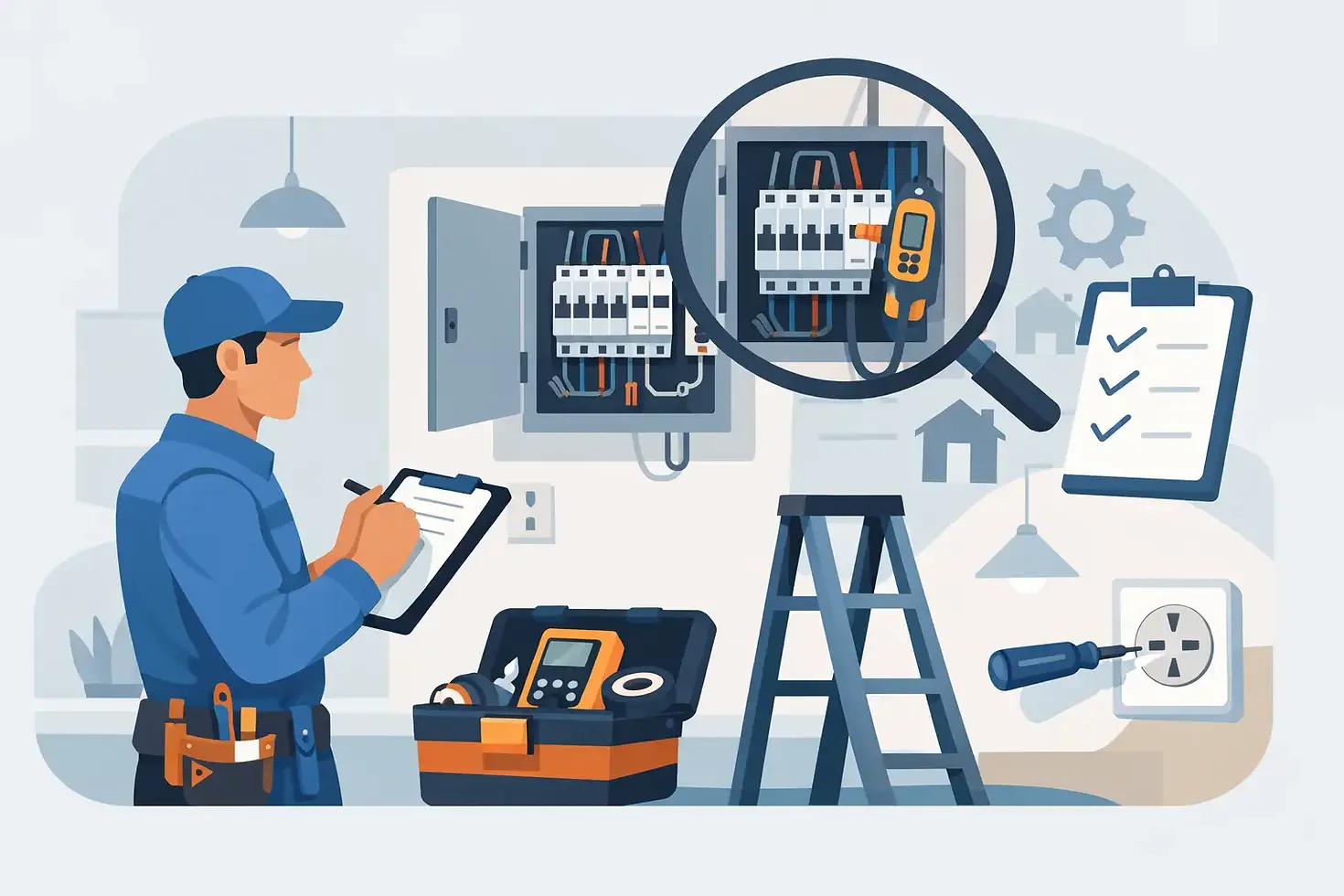
Prepare for Electrical Inspection Properly

A failed appliance is rarely the only problem found during an electrical inspection. Missing asset records, chargers left under desks, damaged extension leads still in service and equipment that cannot be located can all make it harder to demonstrate that risks are being managed. To prepare for electrical inspection properly, treat the visit as an opportunity to identify hazards and put reliable controls in place, not simply as a date for attaching pass labels.
For duty-holders, the objective is clear: protect staff, clients, visitors and guests from electric shock and fire, while keeping evidence that appliances are being checked sensibly. Good preparation also reduces disruption. Engineers can access equipment promptly, testing can be planned around your working day, and faults can be dealt with before they become a greater risk.
Start by confirming what the inspection covers
The phrase electrical inspection can mean different things. A portable appliance testing visit focuses on appliances that plug into a socket or are connected through a lead, such as kettles, monitors, power tools, printers, chargers and extension leads. A fixed-installation inspection concerns the building wiring, distribution boards, sockets and fixed equipment. Some premises also need focused checks of emergency lighting, fire-safety equipment or specialist machinery.
Ask what is included before the appointment. The preparation for PAT testing in an office will differ from a fixed-wiring inspection at a workshop, and a holiday let may have another set of priorities. If equipment is hired, owned by tenants or maintained by another contractor, establish who is responsible for it. Uncertainty over ownership is a common reason appliances fall outside a safety programme.
For portable appliances, agree whether the engineer will test every item, sample lower-risk equipment under a documented risk assessment, or concentrate on areas where equipment changes frequently. A sensible regime reflects the equipment, its environment, how often it is moved and who uses it. A double-insulated desk lamp in a controlled office does not carry the same risk as a frequently handled power tool in a dusty workshop.
Prepare an accurate appliance picture
The quickest way to delay an inspection is to discover that no one knows how many appliances are on site. Walk through each room, store, kitchen, plant area, vehicle and outbuilding beforehand. Include the overlooked items: desk fans, phone chargers, microwave ovens, pedestal lights, electric heaters, multiway adaptors, display screens and extension reels.
Create or update an asset list with the appliance type, make, model, serial number where available, normal location and responsible department. If you already have a register, compare it with the premises rather than assuming it is current. Equipment is often moved between offices, taken home for hybrid work, returned from repair or brought in by staff without being recorded.
Do not remove questionable items from the list merely to make the report look better. If an appliance is no longer required, mark it as disposed of and remove it from service. If it is present but defective, keep it available for assessment or clearly identify it as quarantined. A transparent record shows how the risk was controlled.
Carry out user checks before the engineer arrives
Staff are often the first people to spot a problem. A brief visual check before the visit can take unsafe equipment out of use immediately and allows the inspection time to be spent efficiently. There is no need for staff to open plugs, dismantle equipment or attempt electrical repairs.
Ask teams to look for four clear warning signs:
cracked plugs, loose pins, scorched sockets or damaged casings;
frayed, trapped, taped or crushed cables;
signs of overheating, unusual smells, buzzing or intermittent operation; and
overloaded extension leads, unsuitable adaptors or leads run across walkways.
Anything with visible damage or a suspected fault should be switched off, unplugged where safe to do so, labelled ‘do not use’ and removed from normal use. A failed plug or cable can often be repaired by a competent person, but a repair must be appropriate and recorded before the item returns to service.
Pay particular attention to chargers and leads. Cheap lookalike chargers, counterfeit products and poorly made adaptors can overheat or expose users to electric-shock hazards even when they appear new. Check that chargers are suitable for the device, have the correct UK plug arrangement and are not buried beneath papers, cushions or clothing where heat cannot escape.
Make access safe and realistic
An inspection is not helped by an engineer having to move personal possessions, trace keys or work around blocked cupboards. Tell staff when the visit will take place and ask them to leave appliances accessible and, where possible, switched off. This is particularly useful in busy offices, classrooms, care settings and retail premises where testing needs to fit around people rather than stop the whole site.
Provide access to locked rooms, comms cupboards, kitchens, stores and any off-site accommodation within the agreed scope. Identify appliances mounted behind furniture, connected beneath desks or used outside normal hours. In a workshop, ensure machinery is shut down safely and that a person who understands the equipment is available if isolation or operational checks are needed.
There is a balance to strike. You should not unplug critical IT, refrigeration, care equipment or security systems without a plan. Flag business-critical equipment in advance so testing can be scheduled during a suitable window, with the right person present. For some appliances, inspection and risk assessment may be more appropriate than an unplanned interruption.
Gather the records that show control
The inspection report matters, but it is stronger when it sits alongside the rest of your safety evidence. Have previous test certificates, appliance registers, repair records and risk assessments ready. If an item has previously failed, retain evidence of repair, replacement or disposal. Repeatedly testing the same failed item without addressing the cause is not a defensible control.
Bring forward any manufacturer recall notices, safety alerts or concerns raised by staff. This is especially relevant for white goods in managed accommodation, high-use kitchen appliances and products bought through online marketplaces. A basic electrical test may not identify every product-specific defect. Recall, counterfeit and ‘Do Not Buy’ information can reveal hazards that a pass label alone cannot address.
If your organisation has a policy for staff-owned appliances, make sure it is being followed. Either prohibit their use, require declaration and assessment, or set clear limits on what may be brought in. Personal heaters, fans and chargers are regular sources of unrecorded equipment and unsuitable loading on office circuits.
Brief staff without creating alarm
A short, practical briefing can prevent confusion on the day. Explain that testing is a safety activity, not a search for blame. Staff should know where to place appliances, who to speak to if a device is essential for their work and what will happen if an item is taken out of service.
Use the visit to reinforce everyday habits: carry plugs by the body rather than the cable, avoid daisy-chaining extension leads, keep liquids away from electrical equipment and report damage promptly. These simple user checks complement formal visual inspections and electrical testing. They do not replace either one.
Plan what happens after the inspection
Preparation should include a decision route for defects. Nominate someone who can approve replacements, arrange repairs and communicate restrictions to staff. Without that ownership, a report can identify a risk yet leave the unsafe item on site.
Review the findings by priority. Equipment presenting immediate danger should already be isolated. Other actions may involve replacing damaged leads, reducing extension-lead use, improving cable management, updating labels or correcting gaps in the asset register. Look for patterns as well as individual failures. Several overheated adaptors in one area may point to inadequate socket provision or poor purchasing controls.
A professional PAT testing service should leave you with more than a sticker. You should receive clear results, certificates, an updated asset record and practical actions that can be followed. Electrotech Services records each tested item in PatGuard3 asset-management software and considers visible defects, recalls, counterfeit concerns and unsafe use practices alongside formal testing.
The most useful inspection outcome is not a folder placed on a shelf. It is a workplace where people know how to spot an electrical warning sign, managers know what equipment they own, and defects are acted on before somebody is harmed or a small fault becomes a fire.


